Over the past weeks, I joined two events that addressed child labor in global supply chains: one organized by the UN Global Compact Network Germany and UNICEF Germany in Berlin, and another hosted by the Dutch Ministry of Social Affairs and Employment in The Hague.
Both events revolved around the same shared urgency, the need to accelerate progress toward SDG 8.7 and the eradication of child labor yet approached it from very different angles. Together, they revealed both the gains and the growing gaps in how business, governments, and civil society are responding to one of the world’s most persistent human rights challenges.
From Promising Practices to Structural Limits
The ILO and UNICEF summarized the status quo in their latest report on the global estimates of child labor: “In 2015, the world made a promise to end child labor by 2025 in Target 8.7 of the Sustainable Development Goals (SDGs). That timeline has now come to an end. But child labor has not.”
Despite reported progress on the number of children being in child labor, a closer look at the current situation and trends over time points to several concerns such as the increased number of children below the legal working age in hazardous work and the setback in the overall number of those aged 5 to 11 years engaged in child labor[1]. We remain far from achieving the Target 8.7 of the SDGs. This means that all actors, including businesses, need to reflect on where their leverage can make a difference.
As business and human rights advisors, children’s rights in global supply chains, including child labor, is a priority topic in our daily work with companies. Given the missed timeline for target 8.7, we at CORE sincerely welcomed both events for once again bringing this issue into focus with different stakeholder groups.
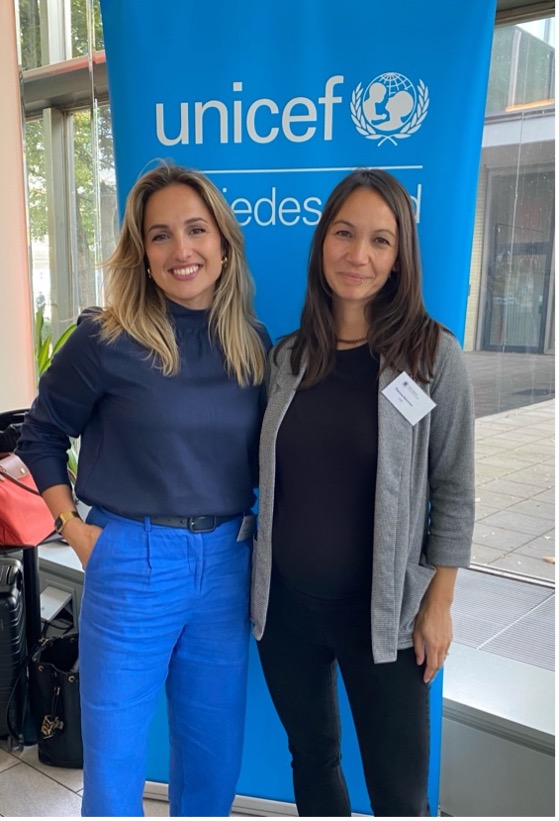
The Berlin event, “Wirksame Ansätze gegen Kinderarbeit – erprobte Maßnahmen in der Praxis,” took a practical lens: what works in tackling child labor, and what can companies contribute
Participants, including many representatives from German businesses, shared case examples from sectors such as agriculture, textiles and extractives.
The discussion highlighted that there are innovative approaches out there, such as pilot projects, local partnerships and supplier training programs that address the issue of child labor.
Nevertheless, participants also pointed out the structural limits, not only on an individual project level, but also on how to develop effective measures to tackle child labor in a global system that rewards short-term efficiency and low sourcing prices.
Many companies have improved their human rights risk assessments, but there are still various open questions on how to develop and apply measures that contribute effectively to eradicating exploitation throughout the tiers of global supply chains.
While aiming at improving the living situation of parents and reducing poverty regionally through partnerships is an important step, efforts should not stop there. Companies need to consider their own leverage, including through responsible purchasing practices and long-term engagement with suppliers. Participants in the UNGC Germany & UNICEF Germany event acknowledged this complexity and reflected on it in small group discussions.
My colleague Lisa wrote about this complexity in a recent CORE Message. One of the takeaways of her article was the following: “It seems like the answer lies in embracing complexity, not fleeing it.” I feel that this quote provides good guidance, also for the topic of how to effectively address child labor in global supply chains.
From Policy Discussion to Practical Guidance
A week later, the Dutch Ministry brought together government representatives, companies and civil society actors in The Hague to reflect on progress since the Durban Call to Action (2022) and to prepare input for the 6th Global Conference on Child Labour in Morocco.
I had the opportunity to facilitate one of the breakout group discussions, guiding an exchange among representatives from companies, NGOs and public institutions on how international labor standards and due diligence can drive the elimination of child labor. The session aimed at providing practical recommendations for the Dutch Ministry to take forward in the global debate.
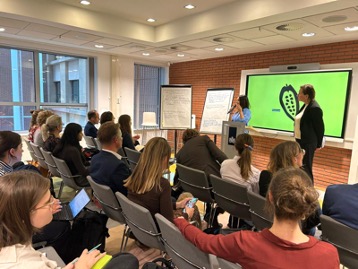
Participants discussed among others that, while policy commitments exist, implementation lags behind. National due diligence legislation remains slow to materialize, and at EU level, regulations rarely address child labor explicitly. What emerged clearly from the conversation was the need for stronger alignment between corporate responsibility, public policy and local realities. Companies alone cannot close the gap, but neither can governments or NGOs without private sector engagement. The solution lies in connecting these spheres of influence.
From Discussion to Action
Across both events, one insight stood out for me: What is missing is scale and persistence. Promising projects often remain isolated, while policy frameworks remain aspirational.
To move forward, we need to strengthen the link between practice and policy and ensure that efforts across business, government and civil society reinforce each other.
At the same time, it is worth acknowledging an uncomfortable truth: the global economic system still benefits from the existence of cheap labor, including child labor. Many of the goods and services that sustain our economies depend on production models that keep costs low and margins high. And, to some extent, even the ecosystem of “tackling child labor” benefits from its persistence through projects, audits, and communications that treat symptoms rather than causes. Recognizing this paradox is essential if we are to move from managing risks to transforming the conditions that create them.
To address child labor, we need to rebalance responsibility. No single actor can solve it alone, yet every actor has leverage.
Companies can influence purchasing practices; governments can create enabling environments, and civil society organizations can use their position to build trust and accountability while focusing on an independent and critical voice. The way forward lies in connecting these levels: aligning intent with incentive and awareness with accountability.
The target of eliminating child labor by 2025 has passed unmet, but this moment should not signal resignation. It should instead mark the beginning of a new phase of coordinated and practical action. Tackling child labor will always be complex, but that complexity should inspire persistence, not paralysis.
If we can strengthen coherence between company actions, government policies and community initiatives, we can move closer to a world where child labor is no longer a recurring topic at conferences, because children no longer have to work.
Theresa for the CORE team
[1] International Labour Organization and United Nations Children’s Fund 2025: Child Labour. Global Estimates 2024