When water levels in the Rhine River dropped earlier this year, the response was largely framed as a logistics problem: fewer ships, so more trucks. But every truck that replaces a barge needs a driver, and Europe is already short half a million of them.
CORE spoke with two labor migrations specialists, Antonia Jeflea a, Anthropologist and PhD candidate at Eberhard Karls Universität Tübingen and Cătălin Buzoianu, Sociologist and Doctoral Researcher at Freie Universität Berlin, about what the current disruptions mean for transport drivers.

CORE: Logistics supply chains have been hit by one disruptive event after another: COVID, the war in Ukraine, rising fuel prices due to disruptions in the Strait of Hormuz, and now low water levels on major rivers in Europe. Governments have responded partly by shifting more freight onto the roads. How realistic is that solution in the longer term and how does it impact the sector and its workers?
Cătălin: Modern globalized economies developed around large centers of industrial production, and all of them sit on a coastline or next to a major river. With global warming, those pillars are under a lot more stress. Events that used to happen once every 100 years have become more frequent. The last times the Rhine was this low were 2022 and 2018.
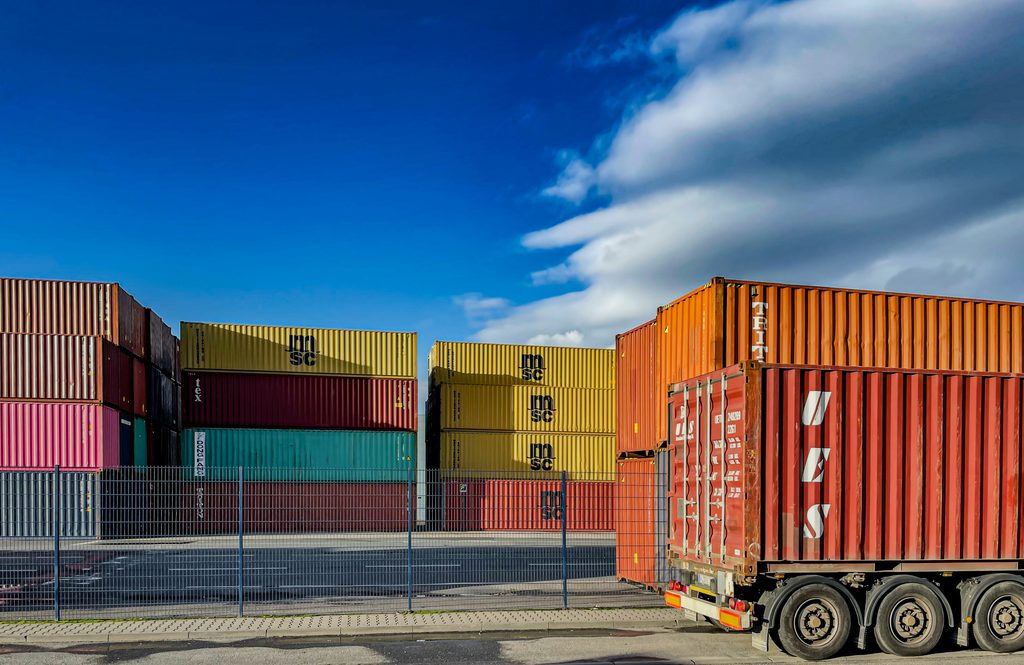
For the transport industry, this is a complete disaster because there is currently no real substitute for waterways. The German Chamber of Commerce and Industry calculated that a 25% reduction in inland waterway capacity would mean 120,000 additional trucks, each carrying 25 tons, on the roads every month.[1]
At policy level, it’s always easier to translate this into a raw material issue. We’re lacking water, so we need more trucks, running all the time, even on Sundays now that some federal states have relaxed their rules. What gets missed is the toll on the people driving those trucks. It’s easy to say this is an engineering problem, but it’s also a human problem. You cannot create water out of thin air, and apparently, you also cannot find the additional drivers needed to come close to offsetting this.
Antonia: The main issue is that we treat these as separate events instead of as a poly-crisis. The war in Ukraine is not over, which has changed the transport routes, and now we have low river waters on top of that. Everything adds up, and the pressure ultimately falls on the drivers. Shifting water freight to road freight sounds easy, but who pays for it? There is still a human cost.
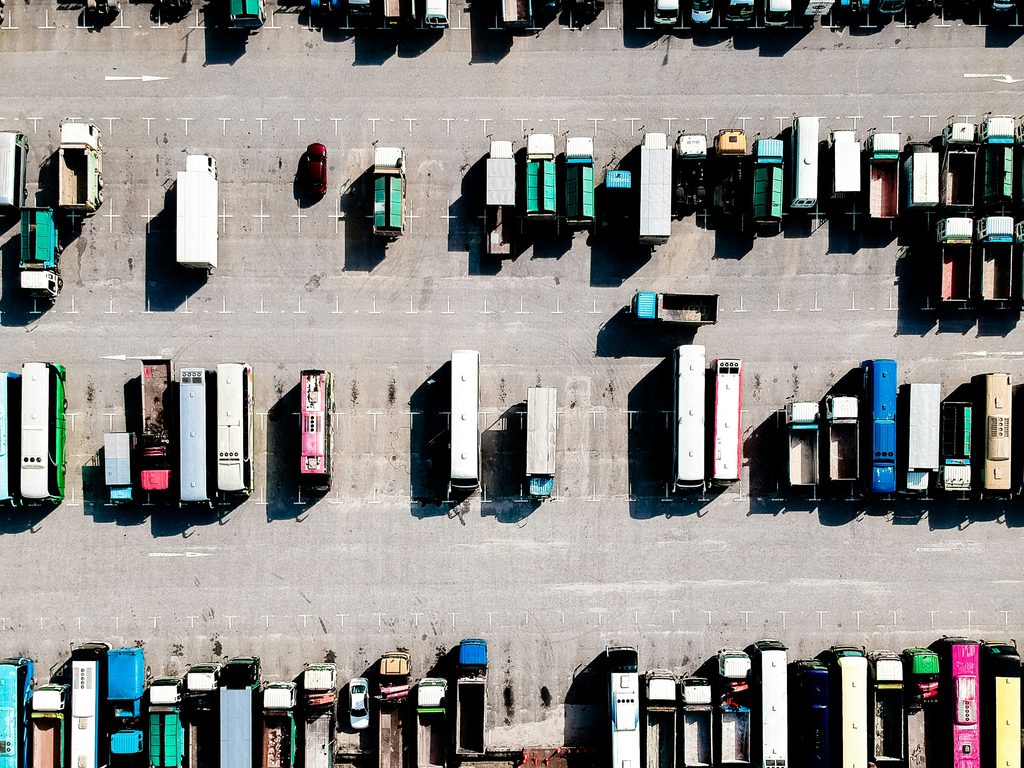
It’s also not only about the drivers. Even if we had enough of them, it would still be a massive issue because the current infrastructure cannot support an influx of trucks, roads are already overcrowded, border controls are coming into force again, and there aren’t enough parking spaces. Even now, we often see trucks parked on the emergency lane because it’s time for a mandatory break, they cannot drive any further, and the parking lots are already full. Nobody thinks that far when they say: let’s just move water transport to road transport and we’ll be fine.
Cătălin: Rail isn’t necessarily the answer either. There aren’t enough locomotive drivers, there isn’t enough capacity, and passenger transport gets the political attention while the deficits in commodity transport remain largely invisible.
And then there’s the East-West discrepancy in pay. You could argue that it gives Eastern European transport companies a competitive advantage, since they can do the work for a fraction of the cost. In practice, this comes at the expense of upholding minimum standards for drivers and their well-being.
CORE: Europe is already facing a major driver shortage. What’s behind it, and has the shortage led to any improvement in working conditions?
Antonia: According to the International Road Transport Union, there were more than 500,000 unfilled truck driver positions in Europe alone in 2024.[2]
We say “truck drivers” and tend to think of unqualified blue-collar workers because the only thing you need is the driving license. But these people come from a wide range of backgrounds. They’re usually men over 40, so the sector will be even more affected as people retire. There are not enough women and not enough young people entering the profession.
The main reason for the shortage is that it’s simply not an attractive job. It used to be attractive because of the wages compared with what people could earn at home. In Germany, one third of truck drivers are migrants, for example from EU countries like Poland, Romania and Bulgaria, but also migrants from non-EU countries such as Ukraine, Moldova and Serbia.
But even if the job is still financially attractive, many other aspects aren’t. Drivers don’t have enough time with their families. They see parking lots as unsafe. They feel responsible for the freight and have to guard it, sometimes at the risk of their lives. And they don’t just drive. They also load and unload.
Honestly, the solutions are most often driven by NGOs and workers’ unions, and they can’t change the whole sector. One good practice I came across is a Polish NGO, Trucks for Life, which has started building gyms in parking lots so drivers can exercise during their breaks.
There is a huge amount of research on the impact this job has on drivers’ bodies, much less on the mental and social impacts, and even less on how the sector itself should change. So no, from my point of view and based on the interviews I’ve done with drivers, there haven’t been major changes.
Cătălin: On Instagram and TikTok, there are a lot of drivers documenting their day to day lives, and you see exactly what Antonia is describing. You drive the entire day, even with mandatory breaks.
Then hopefully you find a safe parking spot, or even just a parking spot. Maybe there’s somewhere to shower, maybe not. You cook your own food, go to sleep, and start again at six in the morning. Six days a week, for most of the year.
It’s a very lonely existence and a very physical form of labor, even though you might not think of it that way because they’re sitting all day.
Both driver representatives and logistics companies in Germany have been trying for years to get politicians to improve the supporting infrastructure: safe parking, sanitary facilities and protection against robbery attempts, because this is valuable cargo however you look at it. There also need to be ways to facilitate the actual delivery. If drivers can now drive on Sundays but the warehouses aren’t open, they’re simply stuck there with the goods.
The policy issue is that you cannot win elections with protective legislation for this kind of infrastructure. It’s invisible when it works well. When it doesn’t, all the structural deficits come to the forefront at once.
CORE: How does subcontracting affect drivers’ working conditions and their ability to access their rights?
Antonia: The 2023 truck driver strikes in Gräfenhausen, Germany, over unpaid wages and severe exploitation highlighted the role of opaque subcontracting arrangements. Drivers from non-EU countries were hired through companies based in other EU countries, such as Poland, and worked in Germany. This illustrates how complex and extended subcontracting chains had already become.
That happens with EU drivers too. In Romania, many are hired through subsidiary companies and subcontractors, and it becomes easy to lose track of correct payments, fair working conditions and social security benefits. The longer the chain gets, the harder it is to keep track of fair treatment.
Cătălin: And take this example: if you’re a Romanian driver working for a Dutch company and driving around the Netherlands, Poland and Germany, who do you go to for help with your rights? German labor unions? The Dutch labor authority? While the European Labour Authority (ELA) exists precisely to address cross-border labor issues, its mandate does not extend to handling individual workers’ complaints. It coordinates national authorities rather than acting directly on behalf of workers. This limits its practical relevance as a recourse mechanism for drivers in multinational subcontracting arrangements.
As a rights holder, it’s very difficult to know who can actually help. So, there’s an implicit incentive to take a transactional view and accept less protection in exchange for more money, even though that contradicts your rights as a worker.
It’s also worth noting that the level of surveillance drivers are under. GPS and smart devices track where they are, how much time they spend behind the wheel, how much time they spend away from it and, above all, how much fuel they use. Everything can be quantified except the human element. And that leaves the door open to a level of exploitation that is unique, considering that the person is alone for almost the entirety of the job.
Antonia: Also, digitalization is often sold as a solution that helps drivers escape their problems. But the end effect is exactly what Cătălin describes: more surveillance and more pressure to drive overtime and skip mandatory breaks.
One platform that drivers have been using for greater transparency and exchange is social media. For example, Romanian drivers have Facebook groups where they ask each other for advice, share which companies pay on time and organize ad hoc protests, for example over the border queues before Romania joined the Schengen Area in January 2025.
CORE: What can companies that rely heavily on road freight do to address these risks to drivers?
Cătălin: I see this in my work in the solar energy sector too: companies that rely on road freight have far more leverage than they typically exercise.
They can decide where they procure their logistics services. They can set minimum requirements in contracts, including requirements on transparency and driver welfare. They can commission independent supplier audits that set standards which cascade down the chain. Where there is EU level regulation but some fuzziness at national level when it comes to upholding rights, companies can be actors for positive change.
Governments can close the loopholes that allow letterbox companies and subcontracting arrangements to undercut wages and social security obligations. But it’s not an “either or” situation. It’s a “this and that” situation.
Disruptive events like the low water levels in the Rhine help uncover the hidden costs and dependencies that not only companies but entire societies have to deal with.
CORE: Has anyone ever come to the drivers you spoke with and simply asked how they are and what would help them?
Antonia: No. I’ve never come across a case where a driver said they were asked about their conditions. Companies and governments see the truck, but they don’t see the people behind the steering wheel. They don’t understand that it’s not only about the movement of goods, but about the people that do the moving.
How this is done matters too. Drivers are often isolated and work long hours, so they may not be very open to talking to someone in just any setting. They need trust-based relationships and safe spaces where their experiences are genuinely taken into consideration, without interrupting their work and without creating problems for them vis a vis authorities, customers or employers.
***
As Antonia and Cătălin describe, whether due to climate change or conflict, the pressures of recurring disruptions ultimately falls on drivers. Long chains of subcontracting make it harder for drivers’ rights to be respected.
For companies that rely on road freight, here are some considerations for more effective human rights due diligence:
- Use your commercial leverage: Include clear expectations on working conditions, transparency and subcontracting when selecting and managing logistics providers.
- Understand who is actually driving: Map subcontracting chains beyond first-tier providers to identify where risks and responsibilities may become fragmented.
- Engage drivers directly: Create safe ways for drivers to raise concerns without fear of negative consequences.
- Review your own purchasing practices: Consider how delivery timelines, last-minute orders and cost pressure may contribute to poor or unsafe working conditions.
- Work collectively: Engage with industry associations, trade unions and NGOs, as structural challenges cannot be addressed through individual supplier relationships alone.
Lisa and Theresa for the CORE team
[1] https://www.jungewelt.de/artikel/527904.verkehrspolitik-keine-lust-auf-sonntagsarbeit.html
[2] https://www.iru.org/intelligence/strategic/global-driver-shortage-report-2025